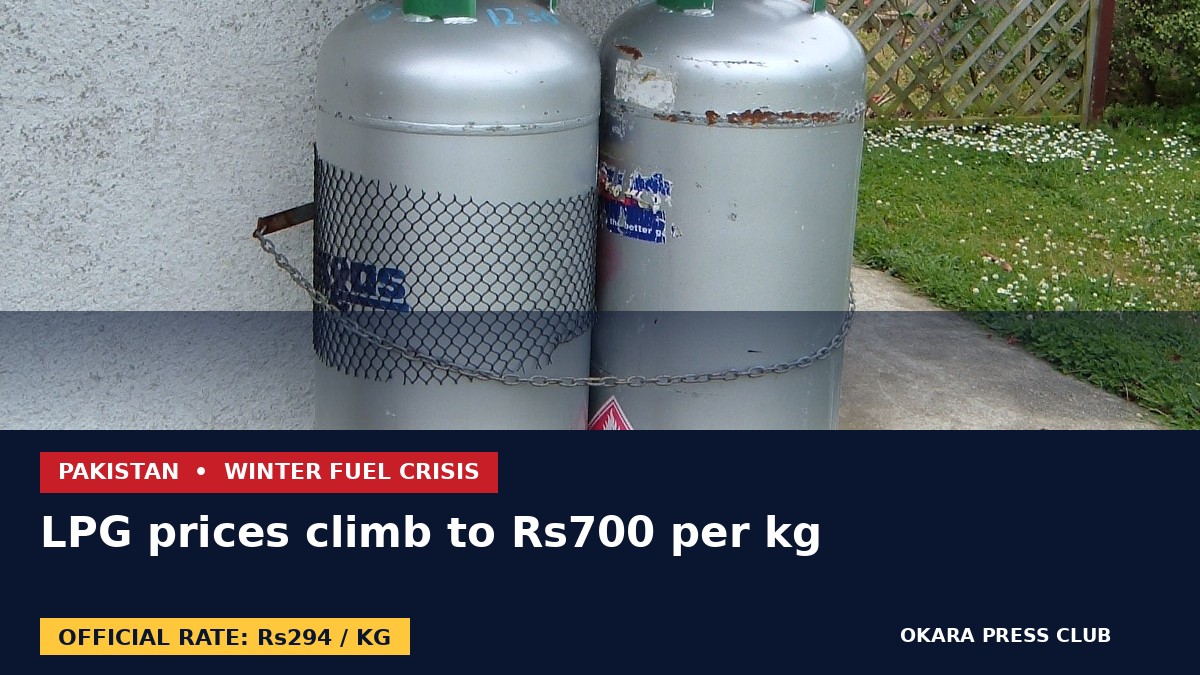
Households across Pakistan are paying far above the official rate for liquefied petroleum gas as a winter shortage tightens, with retail prices reported at up to Rs700 per kilogramme in parts of the country.
The squeeze follows the suspension of supplies through the Taftan border, Geo News reported on Sunday. At the same time, the notified price has risen by Rs14 per kilogramme to Rs294, yet consumers say the fuel is simply not available at that rate in shops.
In Quetta and elsewhere in Balochistan, dealers were charging between Rs530 and Rs700 per kilogramme. Prices in Karachi and Lahore were reported in the Rs520 to Rs580 range, while shop-level reports from Lahore put the figure at Rs550 to Rs600. In Peshawar, the commodity was selling for Rs600 to Rs650 per kilogramme.
Consumers in Lahore urged the government to bring prices down, saying the gap between the notified rate and the price actually charged had become unmanageable for ordinary families heading into winter, when demand for heating and cooking fuel rises sharply.
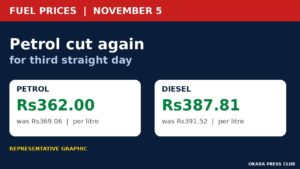
Petroleum Minister Ali Pervaiz Malik, speaking at a private university convocation in Lahore, linked the pressure on oil and gas prices to uncertainty around the Strait of Hormuz. He said Pakistan had managed the situation over the past six months and that petroleum prices were set through a transparent mechanism.
The minister added that gas supplies were arriving from Qatar and assured the audience that ample supplies would continue through December and January. He also said the government was providing subsidised petrol to people on low incomes.
Separately, the Pakistan LPG Marketers Association raised concerns about a proposed pricing policy. Its senior vice president, Ali Haider, said a summary on the policy had been sent to the prime minister and warned it would make LPG 25 to 30 per cent more expensive.
Haider said the proposal had been drawn up without consultation with stakeholders, argued it would hurt both businesses and consumers, and called on the government to deregulate the sector instead.