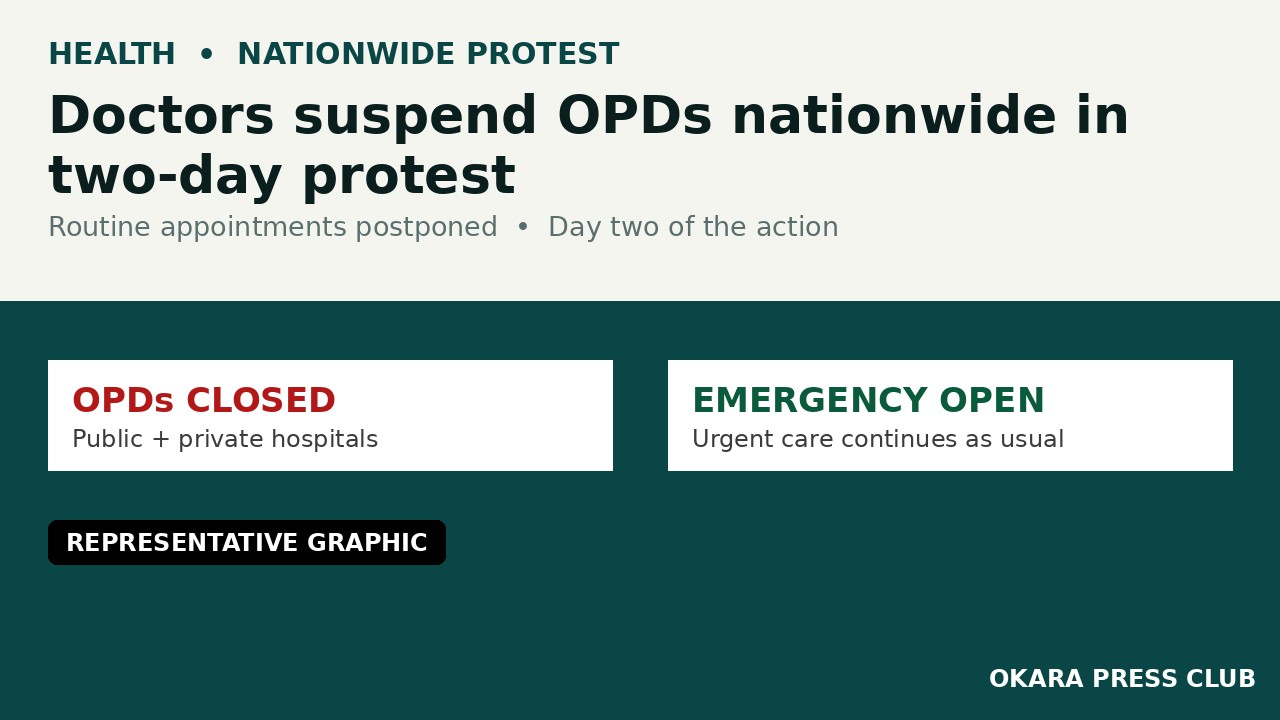
Doctors across Pakistan have suspended routine outpatient care for two days in protest at what their association describes as unfair criminal cases, harassment and a disputed tax system, leaving patients to rely on emergency departments for urgent treatment.
The Pakistan Medical Association suspended outpatient services at public and private hospitals, along with private clinics, across the country. Outpatient departments and private clinics were closed on Monday, including in Karachi, while emergency departments continued to operate as usual.
The association’s Karachi chapter said the decision followed instructions from its central leadership and a resolution adopted unanimously by doctors nationwide on 29 October. It urged doctors, hospitals and other professional bodies to support the action.
The association set out four grievances behind the protest. It pointed to criminal cases registered against doctors which it regards as unjustified, to legal proceedings and complications facing medical professionals, and to what it described as humiliation and harassment of doctors. It also objected to the Federal Board of Revenue’s compulsory Point of Sale system for medical practice, a retail mechanism which doctors argue does not fit clinical consultations.
Karachi chapter leaders said the dignity, professional independence and legitimate rights of doctors had to be protected. They framed the protest as an effort to draw the authorities’ attention to doctors’ concerns, rather than a withdrawal from patient care: emergency facilities remain open, even while routine appointments are suspended.
For patients, the practical effect is disruption to non-urgent care: routine appointments and follow-up consultations face postponement, while anyone with an urgent condition is directed to emergency departments. Today’s statement announced no next step after the two days, and included no response from the Federal Board of Revenue or the health authorities.
The protest reflects a longer dispute over taxation, regulation and protection at work. Doctors have previously warned that criminal cases following medical complications should first be examined by an independent medical board, and that clinical services should not be treated like retail sales for tax purposes. Until those questions are addressed, further collective action remains possible.