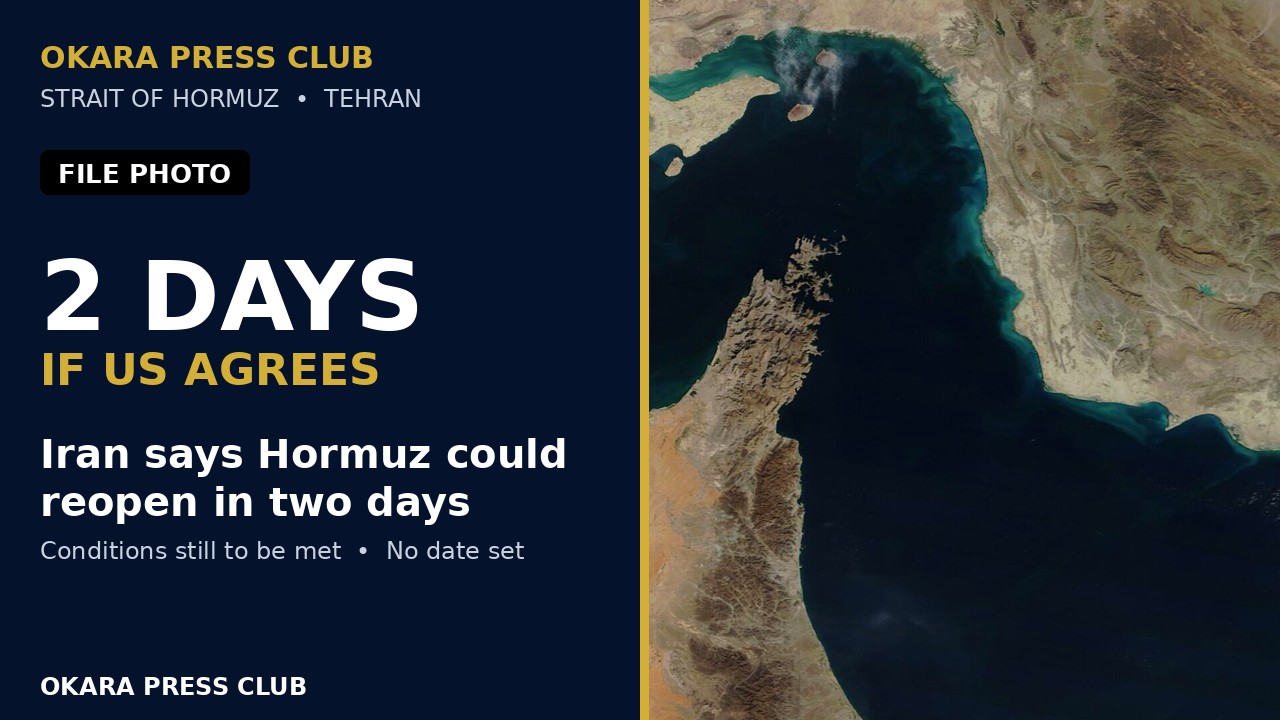
Iran said on Monday it could restore passage through the Strait of Hormuz within two days if the United States accepts its conditions, cutting short a week-long timetable put forward earlier.
Foreign ministry spokesman Esmaeil Baqaei told reporters in Tehran that the shorter timetable showed Tehran’s good faith, and that security in the waterway could be restored quickly once Washington agreed. He said messages were still passing through mediators, but everything hinged on the American side accepting Iran’s demands.
The conditions, as set out in September, include an end to fighting on every front, the release of Iranian funds held abroad, the lifting of sanctions on Iranian oil sales, and an end to the American naval blockade of Iranian ports. Foreign Minister Abbas Araghchi added in an interview released on Sunday that Washington would also need to accept a new transit route agreed with Oman, drop sanctions imposed in recent months, and scale back its troop presence in the region.
The September plan, conveyed to Washington through Qatar, envisaged reopening on the sixth day after the demands were met. The two-day version is therefore a sharp acceleration, though Baqaei gave no sign that Tehran had softened its conditions or that Washington had accepted them.
The strait has been blockaded since the war began in February, sending energy prices sharply higher. The narrow passage normally carries about a fifth of the world’s oil consumption. A Pakistan-bound LNG carrier was hit near the strait on Friday, underlining the stakes for Pakistan’s fuel supplies.
Diplomatic efforts have intensified. Officials from Pakistan, Qatar, Saudi Arabia and Turkey have spoken with Iran, and the American vice-president has written to Tehran. Oman and China urged a political settlement and talks aimed at preventing war altogether.
Warnings continue on both sides. The American president told a rally in Iowa that Iran should expect severe military action, while Baqaei warned that any attack would draw a powerful, immediate and comprehensive response.
No agreement has been announced and no date for reopening has been set. On Tehran’s account, the two-day clock would only start once its conditions are met.