Turkiye’s parliament has ratified the Makkah defence agreement with Pakistan and Saudi Arabia, completing approval in all three countries and bringing the trilateral security pact a step closer to taking effect.
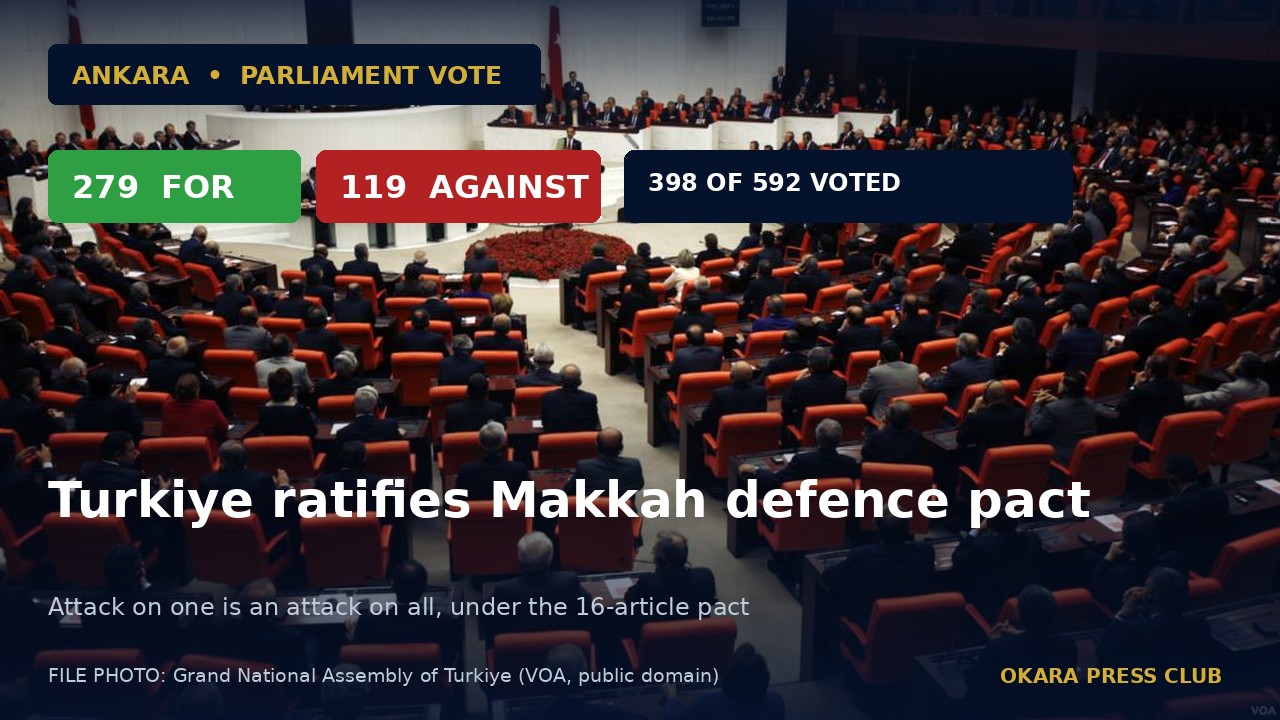
Lawmakers in Ankara endorsed the bill on Thursday by 279 votes to 119, with 398 of the chamber’s 592 members taking part. Pakistan and Saudi Arabia had already completed their own ratification, the Foreign Office in Islamabad said last month.
The agreement was signed at a summit in Makkah on 7 August. Its 16 articles say an attack on one signatory is treated as an attack on all, with the parties pledging to use all necessary means to defend one another’s territorial integrity, sovereignty and internationally recognised borders. The text invokes Article 51 of the United Nations Charter on individual and collective self-defence, following the same principle as NATO’s Article 5.
The scope and nature of any assistance would be decided jointly and within each country’s available resources. None of the three countries can withdraw during the first 10 years after the pact comes into force; after that, a country wishing to leave must give the others three months’ written notice through diplomatic channels.
During the debate, ruling AK Party lawmaker Ziya Altunyaldiz said the agreement was meant to widen security cooperation in the region, was not directed against any third country, and aimed to prevent conflicts rather than escalate them. Opposition lawmaker Mehmet Guzelmansur said clear rules were needed so the pact did not clash with Turkiye’s other international obligations.
The ratification comes as Houthi attacks on Saudi Arabia continue. At a meeting in Riyadh last month, the three countries agreed on the rapid deployment of forces and capabilities in Saudi Arabia, subject to each country’s own laws. Ratification on its own does not send troops: a separate parliamentary mandate would be needed before Turkish personnel could be deployed, and no such mandate has yet been approved.
Beyond collective defence, the pact covers defence-industry cooperation, intelligence sharing, logistics, counter-terrorism and joint training. It is separate from the defence agreement with Kuwait that Pakistan’s cabinet ratified this week.